

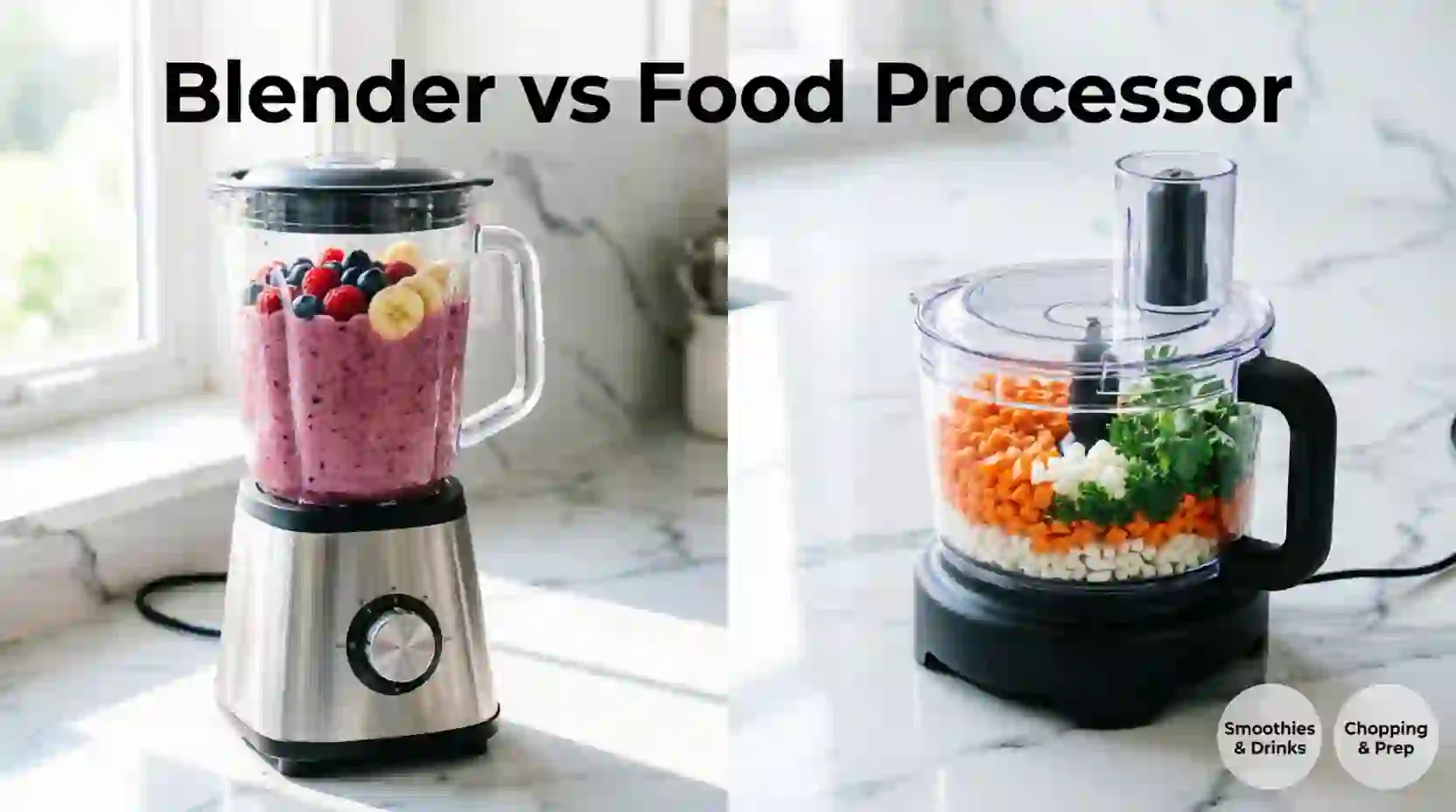

Blender vs. food processor is one of the most common kitchen appliance comparisons today. Many people think these appliances do the same job, but they are actually designed for different tasks. A blender is perfect for smoothies, soups, and liquid recipes, while a food processor is better for chopping, slicing, shredding, and meal preparation. Understanding the difference between a blender and a food processor can help you choose the right appliance for your kitchen needs.
What Is a Blender?
A blender is a kitchen appliance mainly designed for handling liquids and soft ingredients. It uses sharp rotating blades at high speed to blend, mix, puree, and liquefy foods.
Common Uses of a Blender
- Making smoothies
- Preparing milkshakes
- Blending soups
- Crushing ice
- Mixing protein shakes
- Making sauces and purees
Blenders usually have tall jars that create a vortex, pulling ingredients toward the blades for smooth blending.
What Is a Food Processor?
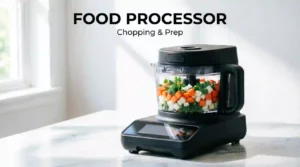
A food processor is a versatile kitchen appliance built for food preparation tasks. Instead of focusing mainly on liquids, it can chop, slice, shred, grate, knead dough, and process solid foods efficiently.
Common Uses of a Food Processor
- Chopping vegetables
- Slicing potatoes
- Shredding cheese
- Mixing dough
- Grinding nuts
- Making salsa
- Preparing salad ingredients
Food processors often come with multiple blade attachments for different functions.
Blender vs Food Processor: Key Differences
| Feature | Blender | Food Processor |
| Best For | Liquids and smooth textures | Solid foods and prep work |
| Blade Speed | Very high | Moderate but powerful |
| Container Shape | Tall and narrow | Wide and short |
| Functions | Blend, puree, liquefy | Chop, slice, shred, knead |
| Dough Mixing | Not ideal | Excellent |
| Smoothies | Excellent | Poor |
| Vegetable Chopping | Limited | Excellent |
| Cleaning | Easier | Slightly more parts |
Which Appliance Is Better for Smoothies?
If you mainly make smoothies, shakes, or soups, a blender is the clear winner. Its design allows ingredients to circulate properly, creating a silky-smooth texture.
A food processor may leave chunks and uneven textures in drinks.
Best Blender Tasks
- Frozen fruit smoothies
- Protein shakes
- Creamy soups
- Nut milk
- Ice crushing
Which Appliance Is Better for Food Prep?
A food processor is far more efficient for chopping and preparing ingredients quickly.
If you cook frequently and spend time cutting vegetables or shredding cheese manually, a food processor can save hours in the kitchen.
Best Food Processor Tasks
- Chopping onions
- Slicing cucumbers
- Shredding carrots
- Making pizza dough
- Preparing hummus
Can a Blender Replace a Food Processor?
A powerful blender can perform some food processor tasks, such as making dips or chopping soft ingredients. However, it struggles with slicing, shredding, and kneading dough.
Similarly, a food processor can blend certain ingredients, but it usually cannot create ultra-smooth drinks like a blender.
Pros and Cons of a Blender
Pros
- Perfect for smoothies and drinks
- Easy to clean
- Fast liquid blending
- Compact design
- Great for soups and sauces
Cons
- Limited slicing and chopping ability
- Not suitable for dough
- Can struggle with dry ingredients
Pros and Cons of a Food Processor
Pros
- Extremely versatile
- Excellent for meal prep
- Handles solid foods well
- Multiple attachments available
- Great for dough and chopping
Cons
- Takes more storage space
- More parts to clean
- Not ideal for smooth beverages
Blender vs. Food Processor: Which One Should You Buy?
The answer depends on your cooking habits.
- You love smoothies and shakes
- You make soups regularly
- You need quick drink preparation
- You prefer simple cleanup
Buy a Food Processor If
- You cook meals frequently
- You prepare lots of vegetables
- You bake dough often
- You want an all-purpose prep machine
Buy Both If:
If your budget allows, having both appliances gives maximum kitchen flexibility.
A blender and food processor complement each other rather than compete directly.
Important Buying Factors
Before purchasing either appliance, consider these factors:
- Motor Power
Higher wattage usually means better performance.
Blender: 500–1500 watts
Food Processor: 400–1200 watts
- Capacity
Choose based on family size and cooking needs.
- Blade Quality
Stainless steel blades last longer and perform better.
- Ease of Cleaning
Dishwasher-safe parts save time.
- Brand Reliability
Trusted brands often provide better durability and warranties.
Final Verdict
In the battle of blender vs. food processor, there is no universal winner. Both appliances are useful, but they excel at different tasks. Choose a blender for drinks, soups, and smooth textures.
Choose a food processor for chopping, slicing, shredding, and meal preparation. Understanding your cooking style and kitchen needs will help you make the best investment. If possible, owning both appliances creates a more efficient and versatile kitchen setup.
Frequently Asked Questions
Is a Blender or Food Processor Better for Making Peanut Butter?
A food processor is generally better because it handles thick mixtures more effectively.
Can a Food Processor Crush Ice?
Some powerful models can, but blenders usually perform better for ice crushing.
Which Appliance Is Easier to Clean?
Blenders are typically easier because they have fewer removable parts.
Do Professional Chefs Use Both?
Yes. Many professional kitchens use both appliances because each serves different purposes.
 Minahil111