
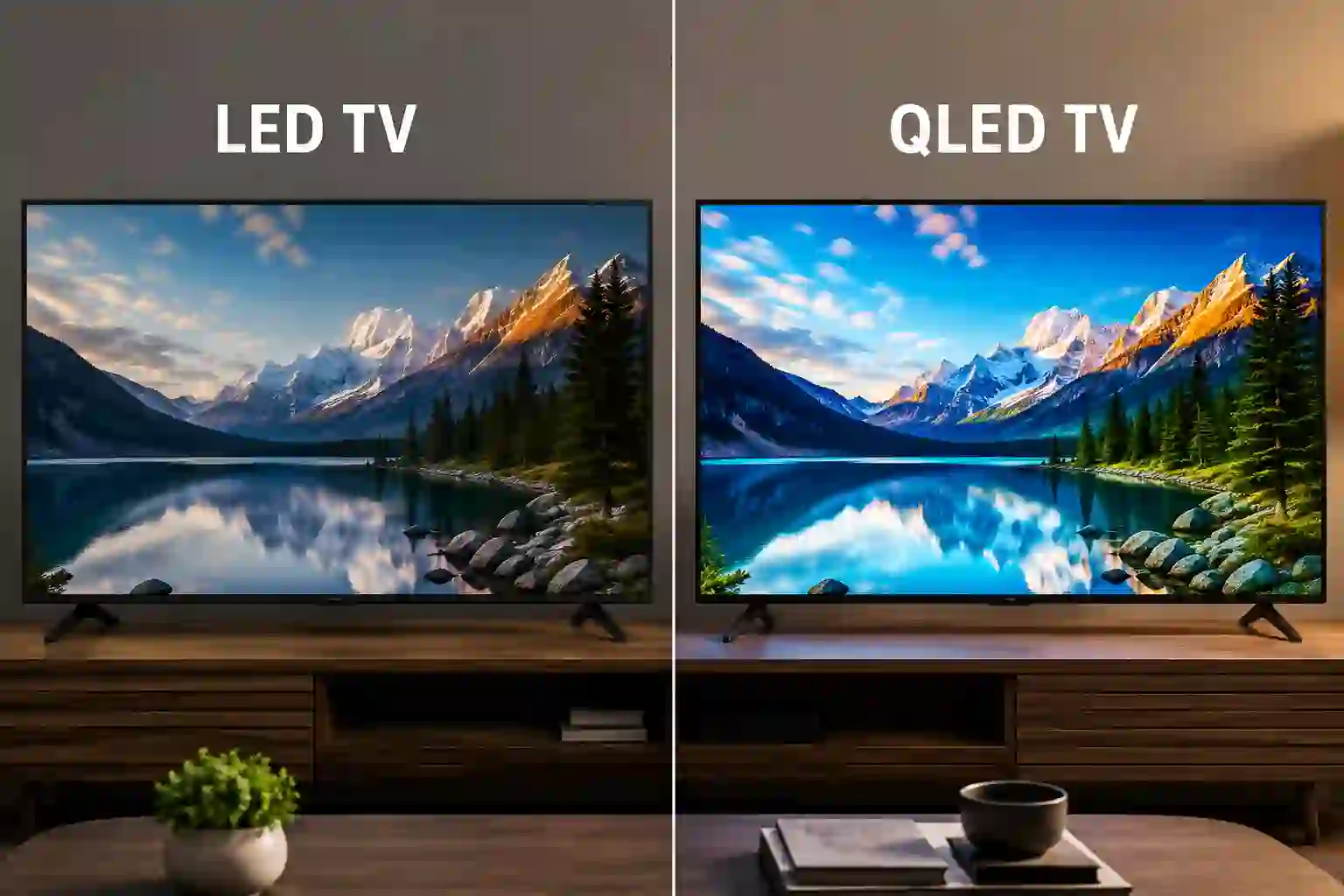


Choosing between an LED vs. QLED TV in 2026 can be difficult. With so many TV options on the market, finding the right one is not always easy. Many buyers want to know the key differences between LED and QLED technology before making a decision. Understanding how these TVs compare in picture quality, brightness, and value can help you choose the best TV for your home and budget.
LED TVs remain affordable and widely available. QLED TVs offer better brightness, richer colors, and improved picture performance. The right choice depends on your budget, viewing habits, and room lighting conditions.
In this LED vs QLED TV comparison, we will explain the key differences, advantages, disadvantages, and real-world performance of each technology. By the end, you will know which TV offers the best value for your home entertainment setup in 2026.
What Is an LED TV
An LED TV is a type of LCD television that uses Light Emitting Diodes (LEDs) to illuminate the screen. It has been one of the most popular TV technologies for many years because it offers a good balance of performance and affordability.
Most budget and mid-range televisions sold in 2026 still use LED technology. These TVs are available in many screen sizes and price ranges, making them a practical choice for many households.
LED TVs can deliver sharp images, decent color accuracy, and good energy efficiency. They work well for everyday activities such as watching movies, streaming content, sports viewing, and casual gaming.
One of the biggest advantages of LED TVs is their lower cost compared to premium display technologies. If you want a reliable television without spending too much money, an LED TV can be a solid option.
However, LED TVs generally have lower brightness levels and less vibrant color than QLED models. Picture quality may also decrease when viewed from wider angles.
What Is a QLED TV?
A QLED TV is an advanced version of LED TV technology. The term “QLED” stands for “Quantum Dot Light Emitting Diode. ” It uses a layer of quantum dots to improve color accuracy, brightness, and overall picture quality.
Unlike standard LED TVs, QLED televisions can produce more vibrant colors and higher brightness levels. This makes them an excellent choice for bright living rooms where glare can affect viewing quality.
In 2026, many premium smart TVs use QLED technology because it delivers a more immersive viewing experience. Movies, sports, and video games often look more detailed and lifelike on a QLED screen.
QLED TVs are also known for maintaining color performance at high brightness levels. This helps HDR content look more realistic and visually impressive.
While QLED TVs offer better picture performance, they usually cost more than traditional LED models. For buyers seeking enhanced image quality and long-term value, the extra investment may be worthwhile.
LED vs QLED TV: Key Differences Explained
Before choosing between an LED vs. QLED TV, it is important to understand how these technologies differ in real-world use. While both use LED backlighting, QLED adds a quantum dot layer that enhances color and brightness.
Here is a quick comparison:
| Feature | LED TV | QLED TV |
| Display Technology | Standard LED-backlit LCD | Quantum Dot LED LCD |
| Brightness | Good | Excellent |
| Color Accuracy | Good | Superior |
| HDR Performance | Basic to Good | Excellent |
| Contrast | Good | Better |
| Viewing Experience | Standard | More Immersive |
| Gaming Performance | Good | Better for HDR Gaming |
| Energy Efficiency | Good | Good |
| Price | More Affordable | More Expensive |
| Best For | Budget Buyers | Premium Entertainment |
The biggest difference between LED and QLED TVs is picture quality. QLED models deliver brighter images, richer colors, and improved HDR performance. This makes them especially attractive for movie lovers, gamers, and users who watch content in bright rooms.
LED TVs, however, remain a strong option for people who want reliable performance at a lower price. They provide good image quality for everyday viewing without requiring a large investment.
Gaming Performance: LED vs QLED for Gamers (2026)
Gaming has become one of the biggest factors when choosing a new TV. When comparing LED vs. QLED TVs for gaming, both technologies can deliver a smooth experience, but QLED has several advantages.
Many QLED TVs in 2026 support advanced gaming features such as higher refresh rates, Variable Refresh Rate (VRR), Auto Low Latency Mode (ALLM), and enhanced HDR gaming. These features help reduce screen tearing and improve responsiveness during fast-paced gameplay.
QLED TVs also offer higher brightness and richer colors. This makes game environments look more detailed and realistic. Open-world games, racing titles, and action games especially benefit from the improved visual quality.
LED TVs can still be a good choice for casual gamers. Many modern LED models include gaming modes and low input lag. If you mainly play occasionally and want to save money, an LED TV can provide solid performance.
For competitive gaming and next-generation consoles, QLED TVs often deliver a more immersive experience. The combination of better HDR performance, stronger brightness, and improved color reproduction gives QLED an advantage.
If gaming is one of your top priorities in 2026, a QLED TV is generally the better long-term investment.
Price and Value: Is QLED Worth the Extra Money?
Price is often the deciding factor when choosing between an LED vs. a QLED TV. LED TVs remain the more affordable option in 2026. They are available in a wide range of sizes and offer good performance for everyday entertainment.
QLED TVs usually cost more because of their advanced display technology. The higher price brings benefits such as better brightness, richer colors, stronger HDR performance, and a more premium viewing experience.
For budget-conscious buyers, an LED TV often provides the best value. If you mainly watch news, TV shows, YouTube, and occasional movies, a quality LED model may meet all your needs without stretching your budget.
For movie enthusiasts, gamers, and users who want superior picture quality, the extra cost of a QLED TV can be justified. The improved visuals are noticeable, especially on larger screens and when watching high-resolution content.
In terms of long-term value, QLED TVs can be a smart investment because they offer a more future-ready viewing experience. As streaming platforms continue to release more HDR and 4K content, QLED technology can take better advantage of these improvements.
If your budget allows it, QLED generally delivers better overall value. However, LED TVs remain an excellent choice for shoppers looking for reliable performance at a lower price.
Pros and Cons of LED TVs and QLED TVs
Choosing between an LED vs. QLED TV becomes easier when you compare their strengths and weaknesses side-by-side.
| LED TV Pros | LED TV Cons |
| More affordable | Lower brightness levels |
| Widely available | Less vibrant colors |
| Good energy efficiency | Weaker HDR performance |
| Suitable for everyday viewing | Limited premium features |
| Available in many sizes | Picture quality not as advanced |
| Excellent brightness | Higher price |
| Rich and accurate colors | Premium models can be expensive |
| Better HDR performance | Not always necessary for casual viewers |
| Great for gaming | Budget options are limited |
| Ideal for bright rooms | Higher upfront investment |
LED TVs are best for buyers who want dependable performance without spending too much. They handle everyday entertainment well and remain one of the most popular TV choices in 2026.
QLED TVs are designed for users who want a more premium viewing experience. They offer better picture quality, stronger HDR performance, and improved gaming capabilities. For many users, these upgrades justify the additional cost.
Understanding these pros and cons can help you select the TV technology that matches your budget and viewing preferences.
LED vs QLED TV: Which One Should You Buy in 2026? (Final Verdict)
When it comes to choosing between an LED vs. QLED TV in 2026, there is no single answer for everyone. The best option depends on your budget, viewing habits, and expectations.
Choose an LED TV if:
* You are shopping on a budget.
* You want good picture quality for everyday use.
* You mainly watch TV shows, news, and streaming content.
* You want the best value at a lower price point.
Choose a QLED TV if:
* You want the best picture quality possible.
* You watch a lot of movies and HDR content.
* You play games on modern consoles.
* Your room is bright and receives a lot of natural light.
* You are willing to pay more for premium performance.
Overall, QLED TVs are the better technology in 2026. They deliver higher brightness, richer colors, improved HDR performance, and a more immersive viewing experience. For users who prioritize image quality and long-term value, QLED is usually the stronger choice.
However, LED TVs continue to offer excellent value for money. If budget is your main concern, a quality LED TV can still provide a satisfying entertainment experience for years to come.
Frequently Asked Questions
Is QLED Better Than LED TVs?
Yes. QLED TVs generally offer better brightness, color accuracy, and HDR performance than standard LED TVs.
Is Qled Worth Buying in 2026?
If you want premium picture quality, gaming performance, and a future-ready TV, QLED is worth the extra cost.
Which TV is better for gaming, LED or QLED?
QLED TVs are usually better for gaming because they provide brighter visuals, improved HDR support, and advanced gaming features.
Do QLED TVs last longer than LED TVs?
Both technologies can last many years. Lifespan depends more on build quality and usage than on the display technology itself.
[…] 10 Advantages and Disadvantages of Using Mobile Phones How to Make Your Android Mobile Phone Faster Android Phone Hanging Reasons and Solutions MacBook Air vs MacBook Pro: Which One Is Better in 2026 LED vs QLED TV: Which One Is Better in 2026 […]