




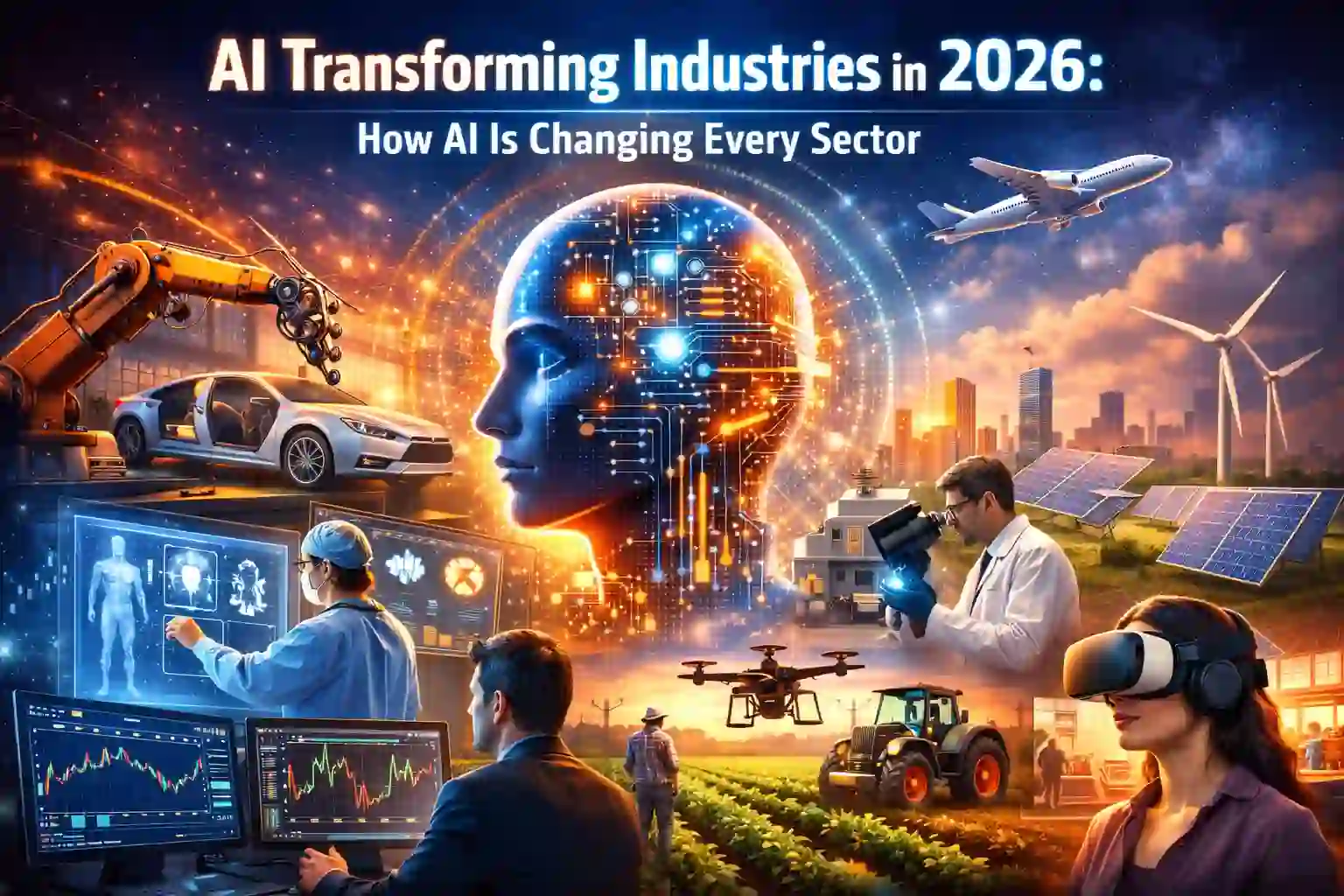
Businesses across the world are using artificial intelligence to work faster, smarter, and more accurately. AI is quietly transforming various industries, including healthcare and finance. It helps companies cut costs, improve efficiency, and make better decisions. Indeed, the outcomes clearly demonstrate its impact. Companies that adopt AI in digital marketing early often gain a strong edge over their competitors. No surprise, experts believe AI will lead the next wave of digital transformation.
What is AI?
Artificial intelligence (AI) is a technology that allows machines to think, learn, and make decisions—almost like humans. It works by using data to recognize patterns and solve problems.
AI includes tools like machine learning, automation, and smart systems. These systems can process large amounts of data in seconds, something that would take humans much longer.
Put simply, AI learns from data and improves over time. That’s why it powers things like chatbots, recommendation engines, and automation tools we use every day.
How AI Is Transforming Industries
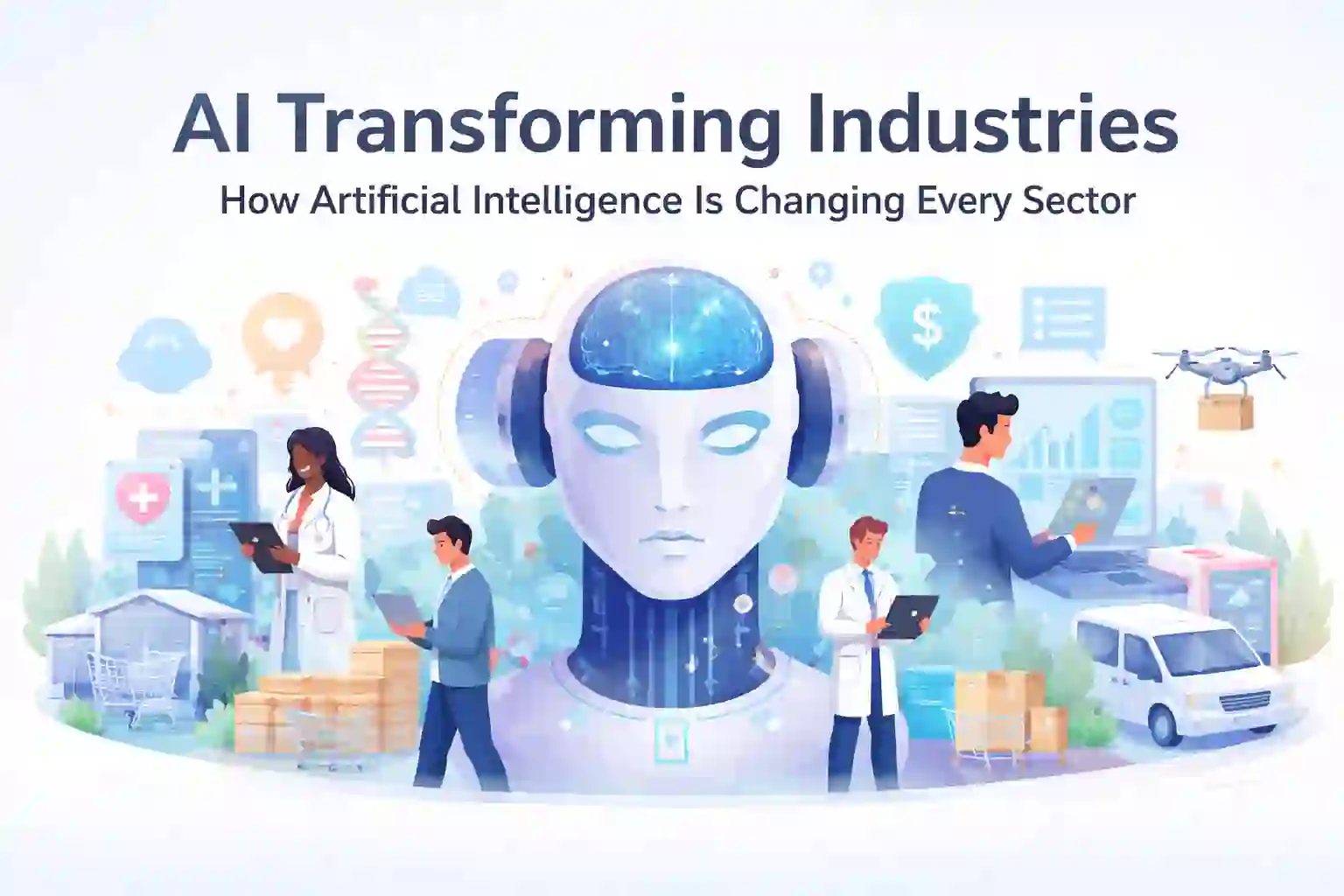
AI transforming industries is changing the way businesses operate. It reduces manual work, accelerates processes, and improves decision-making. Let’s take a look at where AI is making the biggest impact.
Healthcare
AI is helping doctors detect diseases earlier and more accurately. It analyzes medical data quickly and supports better treatment decisions. Hospitals also use AI for managing patient records and automating routine tasks.
Education
Learning is becoming more personalized thanks to AI. Students get content tailored to their level and pace. At the same time, teachers save time with automated grading and smart tools.
Finance
AI plays a key role in fraud detection. It tracks unusual patterns and flags risks instantly. Banks also use AI-powered chatbots to improve customer service and make faster, data-driven decisions.
Manufacturing
Production lines are getting smarter. AI can predict machine failures before they happen, reducing downtime. It also improves speed, quality, and overall efficiency.
Retail
Ever noticed product recommendations while shopping online? That’s AI. It studies customer behavior, suggests products, and helps businesses manage inventory more effectively.
Transportation
AI is driving innovation in transport. From self-driving technology to smart traffic systems, it’s making travel safer and more efficient. Logistics companies use AI to find the fastest delivery routes, saving both time and cost.
Benefits of AI transforming industries
AI brings clear advantages to businesses of all sizes:
- Increased efficiency by automating repetitive tasks
- Lower costs due to fewer errors and less manual work
- Better decision-making with data-driven insights
- Personalized experiences for customers
- Improved accuracy in critical operations
- Faster task completion through automation
- Competitive advantage in the market
- Easy scalability without hiring large teams
Challenges of AI Adoption
Of course, the adoption of AI is not without its challenges. AI transforming industries also comes with challenges.
The biggest hurdle is cost. Setting up AI systems can be expensive, especially for small businesses. Then there’s data privacy—AI needs large amounts of clean data, which raises concerns about security.
Another issue is the shortage of skilled professionals. Not every company has access to AI experts. On top of that, integrating AI into existing systems can be tricky. Poor data training can even lead to biased results.
Still, things are improving. Affordable tools and training programs are making AI more accessible than ever.
Future of AI industries
Looking ahead, AI transforming industries will only accelerate. Automation will take over more complex tasks, and machine learning will become even more accurate.
Workplaces will change. Humans will focus more on creative and strategic roles, while AI handles routine operations. At the same time, new job opportunities will emerge in AI development and management.
AI will also help solve global challenges—think climate change, healthcare access, and supply chain issues. Businesses that adapt early will lead the way.
In Pakistan, both government and private sectors are investing in AI. With the right approach, local industries can compete on a global scale.
Conclusion
AI transforming industries is reshaping the world as we know it. Whether it’s healthcare, retail, or finance, every sector is benefiting in some way. It boosts efficiency, cuts costs, and improves decision-making. Sure, challenges exist, but solutions are already on the way. One thing’s clear: businesses that embrace AI now will stay ahead in the future.
Frequently Asked Questions
Which Industries Does AI Most Impact?
AI transforming industries affects healthcare, finance, education, manufacturing, retail, and transportation the most.
How Does AI Improve Business Efficiency?
AI automates tasks, analyzes data, and provides actionable insights, reducing time and cost.
Is AI Adoption Expensive for Small Businesses?
Initially, yes. But affordable AI tools and cloud-based solutions are making it accessible.
Can AI Replace Human Jobs Completely?
No. AI handles repetitive tasks, while humans focus on creativity, strategy, and decision-making.
 Minahil111
Если вы ищете профессиональную помощь, воспользуйтесь [url=https://youtalk.ru/psiholog-seksolog/]дистанционно сексопатолог[/url] с гарантией конфиденциальности и поддержки.
Онлайн формат позволяет быстро разрешить сомнения и получить квалифицированную помощь.